At five o'clock on the afternoon of August 30, 2026, the gate to the Self-Realization Fellowship's Meditation Gardens on top of Mount Washington closed. Not for the day. For a rehabilitation project the organization expects to run about three years. The headquarters building itself had already shut to visitors two weeks earlier, on August 16. If you've spent a lunch hour on the koi pond bench, walked the rose garden after drop-off, or built a Tuesday afternoon around the visiting hours, you're now improvising.
Here's the part that makes this worth more than a passing notice on a community board: Mount Washington was never built with a second version of this place. Down the hill in Highland Park, a coffee shop closes and three more compete to fill the storefront. Up here, the mountain loses its one formal, gated, planted acre of quiet, and there isn't a runner-up waiting to take the job.
A Hotel That Became a Sanctuary Because Nothing Else Would Fit Up Here
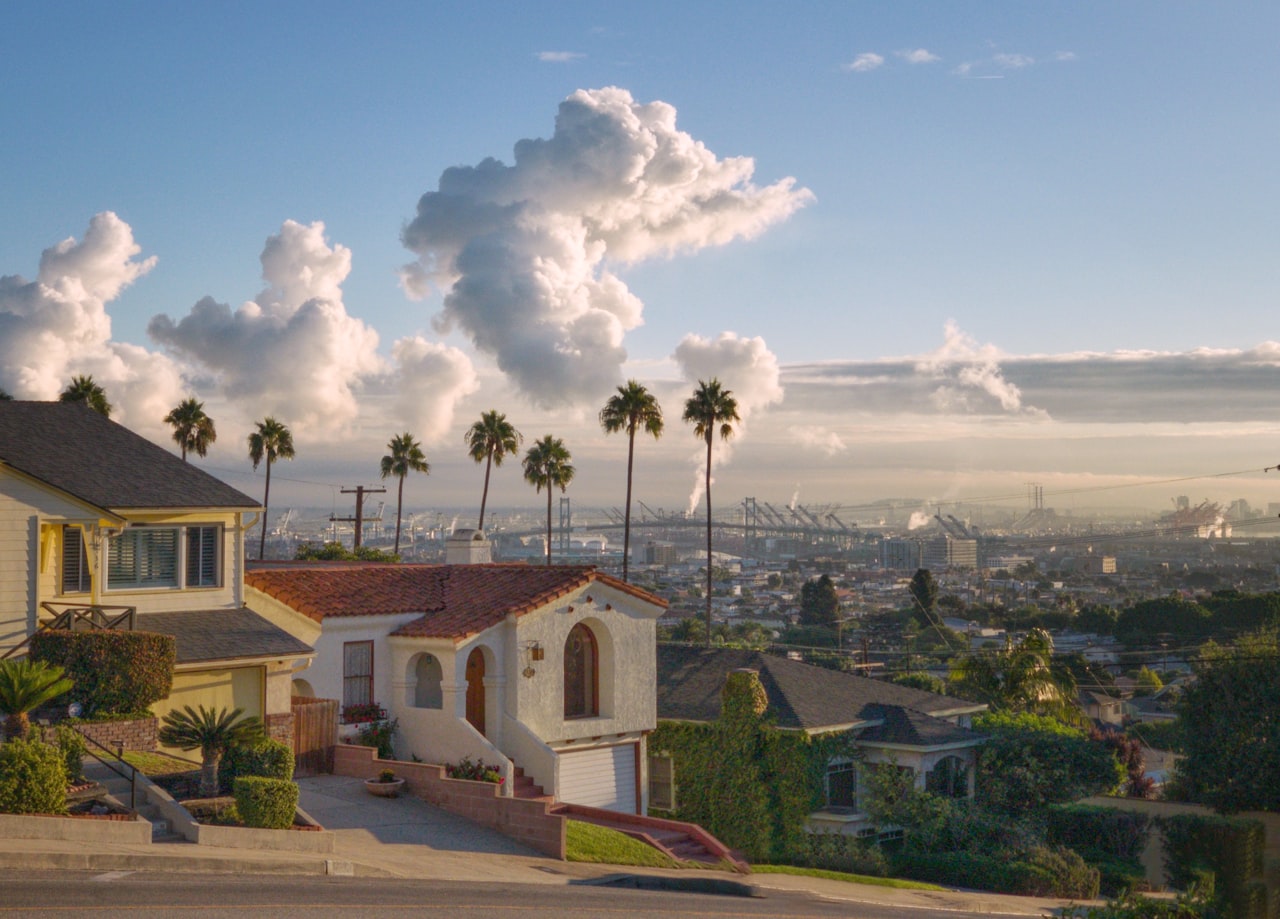
The reason there's only one comes down to how the hill got built in the first place. In 1908, a developer named Robert Marsh looked at the undeveloped peak north of downtown and saw the same trick that had worked on Bunker Hill: a funicular. Construction began that October on the Los Angeles and Mount Washington Railway, climbing what would become Avenue 43 at a grade as steep as 42 percent over roughly 3,000 feet. Marsh built a mission-style hotel at the summit to give the incline somewhere to arrive. The railway ran until 1919, and the hotel eventually sat empty until 1925, when a young monk named Paramahansa Yogananda found it and turned the 12-acre property into the international headquarters of the Self-Realization Fellowship.
That origin story explains something about the neighborhood that still holds today. The terrain that made a funicular necessary is the same terrain that never allowed a commercial grid to form. There's no Mount Washington equivalent of York Boulevard or Figueroa Street, no strip of storefronts competing for foot traffic, because the streets here wind around a hillside instead of running in a grid that can support one. The SRF gardens became something closer to the neighborhood's only formal civic room: a maintained, planted, quiet acreage that wasn't also a hiking trail or somebody's front yard.
What's Actually Behind the Gate Right Now
The closure isn't abstract. It's a specific list of features that residents built routines around:
- A Japanese-style garden with a koi pond
- A small cactus garden
- A rose garden
- A sundial and a wishing well
- The Leaf Temple, a sunken garden circling an old oak tree where Yogananda reportedly spent much of his time
A 1909 real estate advertisement for the new subdivision, printed as an insert in the Los Angeles Times, promised buyers "100 miles of ocean frontage, 100 miles of rugged mountains" from the hilltop. The claim was inflated even then, but the view from up there has always been part of the pitch, and the gardens were where you could actually sit with it.
The timing adds a layer worth noting. Just months before the gate closed, the Mother Center marked its 100th anniversary: Yogananda founded the headquarters on October 25, 1925, and the organization held a formal centennial talk on that same date in 2025. Then, on September 12 of this year, SRF leadership hosted a livestream called "A Vision for the Future of the SRF Mother Center," previewing what the retrofit is actually building toward. The framing matters if you're wondering whether the gate reopens as the same place. The organization is calling this a rehabilitation, not a retirement.
The Walk Still Works, You Just Don't Get the Ending You Used To
For years, the classic Mount Washington loop ended at that gate. Park on Marmion Way near Avenue 43, or take the Metro rail stop at Southwest Museum, and start climbing the original incline route. The grade eases into Canyon Vista Drive and Mount Washington Drive, opening up canyon views along the way. Turn onto San Rafael Avenue and you'd eventually reach the wrought-iron entrance to the SRF grounds at 3880 San Rafael. That entrance is where the walk now stops short. Keep going instead: San Rafael continues to Sea View Avenue, where the pavement gives out and becomes a dirt path into the canyon.
If stairs are more your speed, Eldred Street is still there, one of the steepest streets in the country at a 33 percent grade, with the Eldred Steps at the top feeding into a canyon trailhead. Both routes get you outside and both involve real elevation gain. Neither one hands you a bench next to a koi pond or asks you to keep your voice down out of respect for someone meditating six feet away. A canyon trail is a workout. The gardens were a place to stop moving. Those are not interchangeable categories, and pretending otherwise is how a neighborhood ends up thinking it replaced something it actually just lost.
Cleland Park, the neighborhood's other named gathering spot, doesn't fill the gap either. It's where the annual potluck happens, where kids play and neighbors coordinate garage sales. Useful, well used, and built for a completely different kind of afternoon than the one the SRF gardens offered.
Why This Doesn't Touch the Shopping List
One thing the closure doesn't change: where people go to run errands. Mount Washington has resisted having its own retail strip for the same topographic reasons it never got a business grid, and residents have always driven or walked down the hill for that side of daily life, into Highland Park and Eagle Rock for coffee, dinner, and the rest of it. That pattern isn't shifting because a garden closed. What's shifting is narrower and, for a certain kind of resident, more disruptive: the option to stay on the mountain itself for an hour of actual quiet.
Three years is long enough that it will reshape habits rather than just interrupt them for a season. Somebody who used to duck into the rose garden between meetings is going to find a different way to spend that hour, and by the time the gate reopens, that new habit may have outlasted the old one. Whether the koi pond bench becomes a story people tell newer neighbors, or the gardens reopen to a community that slots right back into the old rhythm, is something only the next three years will actually show.
We pay attention to details like this because they're part of what it means to live on this hill day to day, not because they show up on a listing sheet. If you're curious what else is shifting around Mount Washington, or you're thinking through your own next move on it, The Dix Group is easy to reach. Schedule your concierge consultation whenever you're ready to talk specifics.